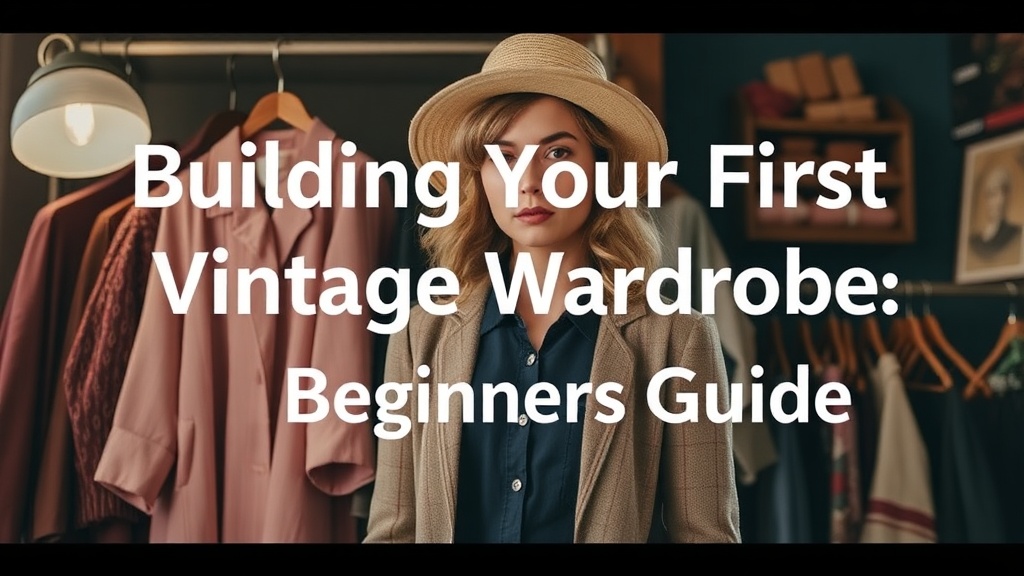
Building Your First Vintage Wardrobe: A Beginner's Guide

What Should You Look for When Buying Vintage Clothing?
This guide walks through everything needed to build a starter vintage wardrobe—from sourcing authentic pieces to mixing them with modern staples. Whether drawn to 1950s silhouettes, 1970s bohemian flair, or 1990s minimalist vibes, a curated vintage collection offers quality craftsmanship, unique personality, and sustainable fashion choices that mass-produced clothing simply cannot match.
The journey begins with knowing what to hunt for. Not every old garment qualifies as wardrobe-worthy vintage. True vintage—typically 20 years or older—requires a discerning eye and some basic knowledge of construction, fabric, and era-specific details.
Start by checking the seams. Vintage pieces from the 1960s and earlier often feature French seams or pinked edges rather than overlocked finishes. The fabric itself tells a story too: natural fibers like wool, silk, and cotton dominate pre-1990s garments, while synthetic blends became more common in later decades. Run a hand along the material. Heavy, substantial fabrics usually indicate quality construction that's stood the test of time.
Labels offer valuable clues. Union labels in American garments (look for ILGWU tags) help date pieces to specific eras. "Made in USA" tags without fabric content listings often indicate pre-1960s origin. The catch? Reproductions exist everywhere. Learning to spot authentic vintage versus "vintage-inspired" separates the treasure from the trash.
Condition matters enormously. Check for underarm discoloration, moth holes, weakened elastic, and broken zippers. Some issues (loose buttons, small tears) are easily fixed. Others (structural damage, persistent odors) might not be worth the effort—unless the piece holds particular sentimental or collector value.
How Do You Mix Vintage and Modern Clothing?
Mixing vintage and modern pieces creates a balanced, wearable wardrobe rather than a costume collection. The key lies in proportion, color harmony, and occasion-appropriate styling.
Start with one statement vintage piece per outfit. A 1970s suede jacket pairs beautifully with contemporary dark denim and clean white sneakers. A 1950s silk scarf elevates a simple modern blazer and tailored trousers. The goal isn't head-to-toe period accuracy—it's creating looks that feel current while honoring classic design.
Silhouette compatibility makes or breaks an outfit. Wide-leg 1940s trousers work with fitted modern tops. A structured 1960s shift dress complements contemporary ankle boots better than period-appropriate pumps (which can look costume-y). Here's the thing: contrast creates interest. Pairing masculine vintage pieces with feminine modern ones—or vice versa—often yields the most compelling results.
Color coordination bridges decades seamlessly. Earth tones from the 1970s play nicely with today's neutrals. Bold 1980s prints need careful pairing with solid modern pieces to avoid visual chaos. Worth noting: vintage blacks often read differently than modern blacks due to fabric aging and dye variations. Mixing them intentionally (rather than assuming they'll match) prevents outfits from looking accidentally mismatched.
Accessories offer the easiest entry point. Vintage leather belts, silk scarves, brooches, and handbags integrate effortlessly into contemporary wardrobes. A 1960s Chanel-style quilted bag elevates jeans and a t-shirt. Art Deco earrings transform a simple black dress. These smaller investments let you test vintage waters before committing to full garments.
Key Integration Strategies
- The 70/30 Rule: Build outfits from 70% modern basics and 30% vintage accents
- Era Anchoring: Pick one dominant decade per outfit to avoid visual confusion
- Texture Play: Pair vintage silk with modern denim, or vintage wool with contemporary leather
- Modern Underpinnings: Contemporary undergarments (seamless bras, proper shapewear) help vintage silhouettes fit modern bodies
Where Are the Best Places to Shop for Vintage Clothing?
The best vintage shopping combines local treasure hunting with strategic online browsing, each offering distinct advantages for different types of purchases.
Physical vintage stores and thrift shops provide tactile evaluation opportunities that online shopping cannot match. Calgary's own Vintage Village hosts multiple dealers under one roof, offering curated collections spanning decades. Estate sales in older neighborhoods (Mount Royal, Elbow Park) often yield high-quality pieces from well-maintained wardrobes. The thrill of discovery drives many collectors to regular thrift store circuits—Value Village, Goodwill, and local charity shops reward persistent hunters.
Specialty vintage boutiques offer curated, higher-end selections. Shops like Farfetch Vintage authenticate and condition-rate their inventory, saving time but commanding premium prices. These sources work best for investment pieces—vintage designer handbags, coats, or special-occasion dresses where quality and authenticity justify the cost.
Online marketplaces expand access exponentially. Etsy hosts thousands of vintage sellers with detailed measurements and condition reports. eBay remains valuable for specific searches (brand + era + garment type). Instagram sellers—many operating through DM sales—offer highly curated feeds and relationship-based buying. The catch? Online purchases require careful measurement comparison. Vintage sizing bears little resemblance to modern size charts. Always request flat measurements (bust, waist, hip, length) and compare against well-fitting garments already owned.
| Shopping Source | Best For | Price Range | Selection |
|---|---|---|---|
| Thrift Stores (Value Village, Goodwill) | Casual experimentation, accessories | $5-$30 | Hit-or-miss, requires patience |
| Local Vintage Boutiques | Authentic era pieces, try-before-buying | $40-$200 | Curated, limited but quality |
| Estate Sales | High-quality classics, jewelry | $10-$150 | Unpredictable, seasonal |
| Online (Etsy, eBay) | Specific searches, rare items | $25-$500+ | Vast, requires filtering |
| Instagram Sellers | Curated aesthetic, relationship buying | $35-$300 | Moderate, style-specific |
Shopping Tips from the Trenches
Timing matters. Estate sales typically discount heavily on final days. Thrift stores restock early in the week. Seasonal transitions (September, January) bring wardrobe cleanouts and fresh inventory.
Measurements trump sizes. Carry a tape measure. Know personal measurements (bust, waist, hip, shoulder width, preferred sleeve length). Vintage garments—especially pre-1980s—run significantly smaller than modern equivalents. A "size 10" from 1965 fits like a modern size 4 or 6.
Smell before buying. Musty odors sometimes wash out. Persistent smoke, perfume, or mildew smells may never fully disappear. Dry cleaning costs add up quickly—factor them into purchase decisions.
How Much Should You Budget for a Starter Vintage Wardrobe?
A functional starter vintage wardrobe requires approximately $300-$600 invested strategically across key categories, though dedicated bargain hunters can build respectable collections for half that amount.
Focus spending on categories where vintage truly excels: outerwear, special occasion pieces, and accessories. A vintage wool coat (look for Burberry-style trenches or 1970s full-length styles) offers superior construction at fractions of contemporary designer prices. Silk blouses from the 1980s and 1990s provide timeless workwear options. Denim jackets from the 1970s and 1990s bring authentic character that modern distressing attempts to replicate.
Begin with these foundational pieces:
- One quality coat or jacket — $75-$150 at vintage boutiques, $15-$40 at thrift stores
- Two silk or high-quality cotton blouses — $25-$60 each
- One pair of well-fitting trousers or a skirt — $20-$50
- A statement accessory (scarf, belt, or handbag) — $15-$75
- Vintage jewelry — $10-$40 for costume pieces, more for precious metals
That said—don't blow the entire budget at once. Building a vintage wardrobe takes time. The hunt is part of the pleasure. Collect slowly, choosing pieces that genuinely excite rather than filling closets with mediocre finds.
Quality vintage often costs less than comparable new garments. A 1970s wool blazer with hand-finished seams might run $45. Similar construction in contemporary retail? $300+. The savings allow investment in tailoring—vintage pieces rarely fit perfectly off the rack, but $20-$40 in alterations transforms good finds into wardrobe staples.
Caring for Your Investment
Proper maintenance extends vintage garment lifespans significantly. Store wool and silk in breathable cotton garment bags, not plastic. Cedar blocks and lavender sachets deter moths naturally. Avoid wire hangers—vintage shoulders stretch and distort easily. Hand-wash or dry clean delicates; machine washing destroys vintage construction.
Small repairs preserve value. Learn basic hand-sewing: reattaching buttons, reinforcing loose seams, securing hems. For complex repairs (broken zippers, lining replacement), establish relationships with skilled tailors. The cost of professional repair often justifies preserving a truly special piece.
Building a vintage wardrobe rewards patience, curiosity, and willingness to look beyond fast-fashion convenience. Each piece carries history—a previous life, another wearer's story. That connection to the past—combined with distinctive style unavailable in contemporary retail—makes vintage clothing more than mere fashion. It becomes personal archive, sustainable choice, and daily inspiration rolled into garments that only improve with age.