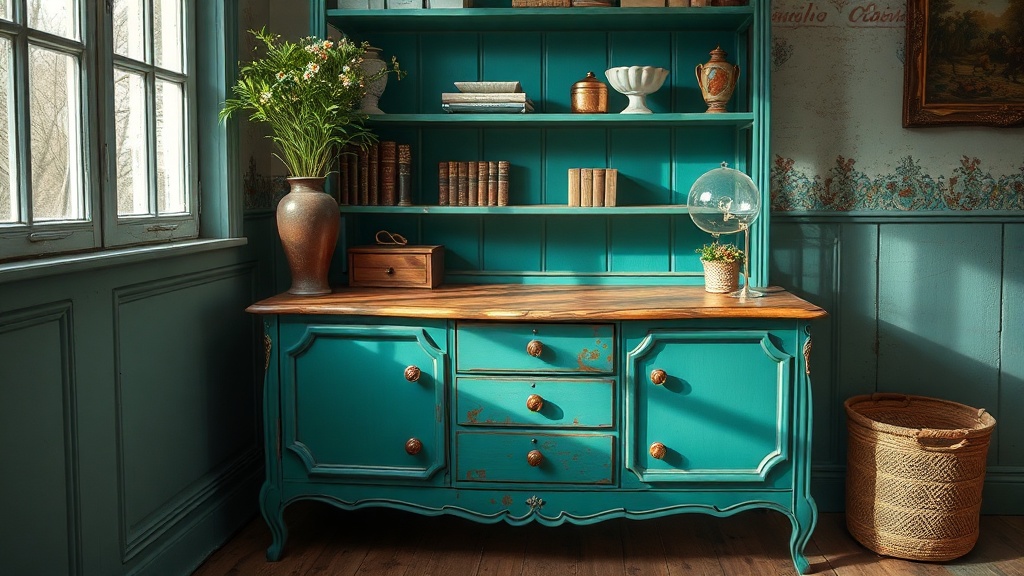
How to Restore Vintage Furniture: A Complete Beginner's Guide

Vintage furniture restoration transforms worn, neglected pieces into beautiful, functional items that add character to any home. This guide covers the complete process—from assessing whether a piece is worth saving to applying the final finish. Whether someone picked up a battered mid-century dresser at a Calgary estate sale or inherited a scratched dining table, the steps here will walk through the entire restoration path. No prior experience required.
What Tools Do You Need to Start Restoring Furniture?
The right tools make restoration far less frustrating. You don't need a professional workshop—most beginners can start with a modest collection that grows over time.
Here's what belongs in a starter toolkit:
- Screwdrivers (flathead and Phillips in various sizes)
- Hammer and rubber mallet (the latter prevents denting wood)
- Wood glue — Titebond III is a reliable choice for most repairs
- Clamps — these hold glued joints together while drying
- Sandpaper in multiple grits: 80, 120, 150, 220
- Random orbital sander — the DeWalt DWE6423 offers good value
- Paint scraper and putty knife
- Steel wool (0000 grade for final smoothing)
- Safety gear: N95 mask, safety glasses, nitrile gloves
As skills develop, additions like a router, biscuit joiner, or spray gun expand what's possible. But here's the thing—plenty of stunning restorations happen with nothing more than hand tools and patience.
How Do You Know If a Piece Is Worth Restoring?
Not every battered chair deserves salvation. Assessing a piece before hauling it home (or committing hours to it) saves disappointment later.
Check the bones first. Solid wood furniture—oak, walnut, maple, mahogany—holds value and withstands restoration. Pressboard or particle board? Usually not worth the effort (it swells when wet and doesn't take refinishing well). Look for dovetail joints in drawers—these signal quality construction. Staples and glue blocks? Less promising.
Inspect for structural damage. Missing legs, broken frames, or severely warped boards demand advanced skills. Loose joints, on the other hand, are often repairable with glue and clamping. Surface scratches and worn finish? Those are cosmetic—and cosmetic issues are the easiest fixes.
Consider the hardware. Original brass pulls, ceramic knobs, or casters add authenticity. Replacements exist (sites like House of Antique Hardware carry period-appropriate options), but matching exactly can prove difficult.
The catch? Sentimental value overrides all of this. That wobbly side table from a grandmother's house? Worth saving—even if the wood's nothing special.
Common Wood Types and Their Restoration Potential
| Wood Type | Characteristics | Restoration Difficulty |
|---|---|---|
| Oak | Hard, prominent grain, durable | Easy — forgiving under sanders |
| Walnut | Rich color, fine grain, expensive | Moderate — scratches show easily |
| Mahogany | Reddish tone, works well by hand | Moderate — requires careful staining |
| Pine | Soft, light, dents easily | Hard — dents deeply, blotches with stain |
| Veneer | Thin wood layer over substrate | Hard — sanding through destroys it |
What's the Step-by-Step Process for Refinishing Wood Furniture?
Refinishing follows a logical sequence. Skip steps and the final result suffers.
Step 1: Disassemble What You Can
Remove drawers, hardware, and detachable legs. Label everything—painters tape and a Sharpie work fine. Photograph the piece from multiple angles before disassembling; these become references during reassembly.
Step 2: Clean Thoroughly
Years of grime hide the true condition. Murphy's Oil Soap (diluted per instructions) cuts through dirt without damaging wood. For stubborn buildup, a paste of baking soda and water applied gently with a soft cloth helps—though test in an inconspicuous spot first.
Step 3: Strip Old Finish
Chemical strippers (like CitriStrip) work faster than sanding alone—especially on curved details where sandpaper can't reach. Apply in a well-ventilated area, wait the recommended time, then scrape away the sludge. Wear that N95 mask. The goo goes to hazardous waste, not regular trash.
For small pieces or those with minimal finish, sanding alone suffices. Start with 80-grit to remove the old coating, progress through 120 and 150, and finish with 220 for a smooth surface ready for finishing.
Step 4: Repair Damage
Fill cracks and holes with wood filler (Timbermate or Elmer's Carpenter's Wood Filler). For larger missing chunks, epoxy putty (Abatron WoodEpox) provides structural integrity. Loose joints get dismantled, old glue scraped away, fresh Titebond applied, and clamps tightened overnight.
Veneer repairs require special attention—bubbling veneer can be re-adhered with a clothes iron set to medium heat (protect the surface with a cotton cloth). Missing veneer patches are an advanced technique; beginners might skip these pieces or embrace the "patina."
Step 5: Apply Finish
The finish protects wood and creates the final look. Options abound:
- Oil finishes (tung oil, Danish oil) — easy application, natural look, requires reapplication every year or two
- Wax — soft sheen, easy to repair, not very protective
- Shellac — traditional, repairable, not water-resistant
- Polyurethane — durable, available in water-based (General Finishes High Performance) or oil-based (Minwax Polyurethane) formulas
- Paint — chalk paint (Annie Sloan, Fusion Mineral Paint) requires minimal prep and offers vintage charm
Apply thin coats. Sand lightly with 320-grit between coats. Three to four coats of poly provide real protection; oils might need four to six applications, wiped on, allowed to penetrate, excess removed.
How Long Does Furniture Restoration Take?
Patience isn't just a virtue here—it's a requirement. A simple chair might take a weekend. A large dresser with detailed carving? Several weeks of evenings.
Here's a realistic timeline breakdown:
- Assessment and shopping: 2-3 hours (including trips to the hardware store)
- Stripping: 4-8 hours over two days (includes drying time)
- Sanding: 3-6 hours depending on piece size
- Repairs: 2-4 hours plus 24 hours glue drying
- Finishing: 4-6 hours across multiple days (finish needs to cure between coats)
Rushing leads to dust nibs in the finish, uneven color, or joints that fail within months. The waiting—the watching glue dry, the letting polyurethane cure—is where many beginners grow impatient. Worth noting: the piece has already lasted decades. It can wait another week.
What Mistakes Do Beginners Make Most Often?
Everyone makes errors. These are the most common (and most avoidable):
Sanding with the wrong grit progression. Jumping from 80-grit to 220 leaves deep scratches that telegraph through the finish. Work through each grit properly.
Over-sanding veneer. That thin layer of fancy wood over particle board? Once sanded through, it doesn't grow back. When in doubt, hand-sand gently.
Applying finish over dust. Wipe down with a tack cloth between every coat. Those tiny particles become bumps that ruin the smooth feel.
Ignoring the underside. Finishing only visible surfaces seems efficient—until humidity causes uneven expansion and warping. Treat all surfaces, even hidden ones.
"The best restoration is one where you can't tell anything was done." — Old furniture maker's saying
Start small. A simple side table teaches more than a complicated secretary desk—and mistakes on small pieces cost less. Local resources help too: Calgary's municipal recreation courses sometimes offer furniture restoration workshops, and YouTube channels like Dashner Design provide visual guidance for specific techniques.
Restoration connects the past to the present. Each piece carries history—scratches from a child's homework, water rings from decades of coffee cups. The goal isn't factory perfection; it's honoring that history while creating something beautiful enough to use for decades more. Pick up that sander. The furniture is waiting.
Steps
- 1
Assess and Clean Your Vintage Piece
- 2
Repair Structural Damage and Sand Surfaces
- 3
Apply Stain, Finish, and Protective Sealant