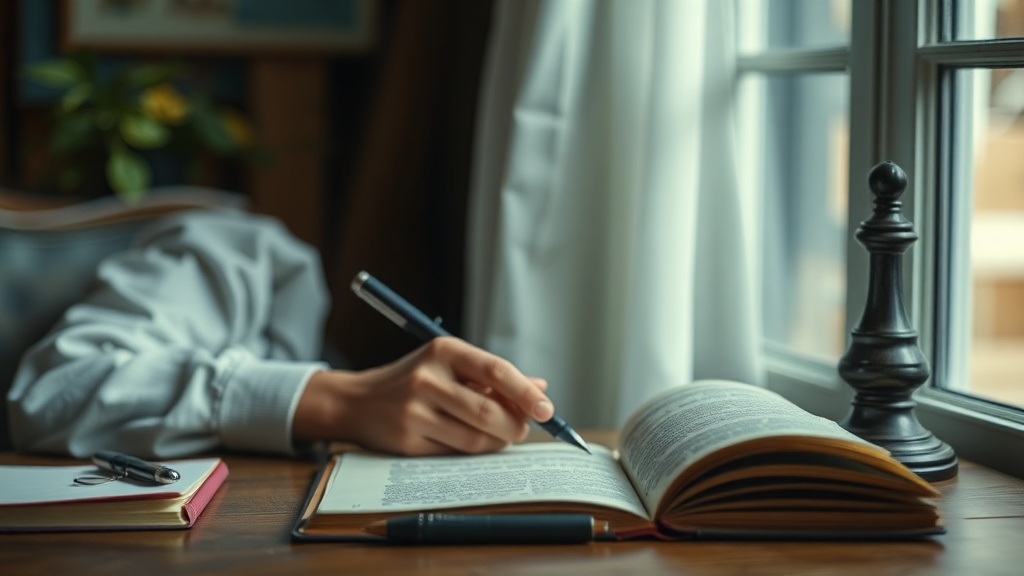
The Lost Art of Letter Writing: How to Start a Vintage Correspondence Ritual

This post covers the practical steps for building a vintage correspondence ritual—from selecting stationery and pens to finding modern pen pals and crafting messages that linger. In an era of ephemeral notifications and auto-deleting stories, the deliberate act of putting pen to paper offers a rare form of presence. You will learn how to source materials, structure a meaningful letter, and integrate this slow practice into daily life without turning it into another item on an already crowded to-do list.
Why is handwritten correspondence experiencing a revival?
The answer lies in digital fatigue. After years of endless Slack pings, Zoom calls, and algorithm-curated feeds, many people are reclaiming analog rituals as a form of mental refuge. Handwritten letters demand something that emails rarely receive: undivided attention. (There is no "send" button to rescue a typo.) The writer must slow down, consider each word, and accept the imperfections that come with ink on paper.
The revival is not merely nostalgic. According to Smithsonian Magazine, letter writing has surged among millennials and Gen Z as a deliberate counterbalance to screen-dominated communication. Psychologists have noted that the tactile nature of writing by hand activates different neural pathways than typing, often leading to more reflective and emotionally honest content. That said, this is not about abandoning technology. It is about creating a boundary—an intentional space where communication becomes tangible, lasting, and entirely under your control.
Physical letters also carry a sense of permanence that digital messages lack. A saved email lives on a server you do not own. A letter sits in a drawer, a shoebox, or a frame. It yellows. It smells of the coffee shop where it was written. These sensory details anchor memories in a way that screenshots never will. There is also the matter of privacy. Unlike a messaging app that scans conversations for advertising keywords, a sealed envelope offers a confidentiality that feels almost rebellious in 2025. You decide who reads it, where it travels, and how long it survives.
What supplies transform letter writing from chore to ritual?
Quality materials make the difference between a task that feels like homework and one that becomes a cherished routine. You do not need a fortune in antiques to begin, but you do need tools that invite repetition.
Start with paper. Crane & Co. still manufactures 100% cotton stationery in Massachusetts, and their Classic Crest line offers a substantial weight that handles fountain pen ink without feathering. For everyday practice, JetPens stocks affordable options like Midori MD letter paper or Rhodia lined pads. The goal is to find a surface that slows the pen just enough to encourage deliberate strokes. Textured laid paper creates audible feedback as the nib moves, which some writers find hypnotic; smooth coated paper allows ink to dry in crisp lines. Neither is superior—it depends on whether you prefer the sensation of resistance or glide.
For writing instruments, the Pilot Metropolitan remains the undisputed entry point into fountain pens. It costs roughly twenty dollars, accepts standard cartridges, and writes smoothly enough to spoil you for ballpoints. If you prefer a more substantial investment, the Montblanc Meisterstück 149 has been a status symbol since 1924—though a Lamy 2000 or a Sailor 1911 Large offer comparable performance at friendlier prices. The catch? Fountain pens require maintenance. You will need to flush them every few weeks if you use bottled ink. A bulb syringe from any pharmacy makes this easier than running water through the nib for minutes on end.
Ink and sealing wax add personality. Ferris Wheel Press produces boutique inks in bottles that double as desk decor, with colors like "Three Steamboats" and "The Sugar Beach." For sealing letters, J. Herbin sealing wax in traditional red or modern metallics melts cleanly with a standard tea light. A simple brass seal from Etsy artisans costs less than a streaming subscription and instantly improves the unboxing experience for your recipient.
| Supply Category | Budget Pick | Investment Pick |
|---|---|---|
| Paper | Midori MD Letter Paper ($12/50 sheets) | Crane & Co. Classic Crest ($28/50 sheets) |
| Pen | Pilot Metropolitan ($20) | Montblanc Meisterstück 149 ($1,050) |
| Ink | Pilot Namiki Black Cartridges ($5) | Ferris Wheel Press Bottled Ink ($35) |
| Sealing Wax | Manuscript Sealing Sticks ($8) | J. Herbin Supple Wax ($18) |
Storage matters too. A wooden letter box from IKEA (the MOPPE mini chest works well) or a vintage recipe card tin keeps supplies visible. Out of sight, out of mind—so keep the pen and paper where you will actually see them. Some writers dedicate a small corner of their desk to correspondence, complete with a blotter and a desk lamp with a warm bulb. The environment cues the behavior.
How do you craft a letter that resonates?
Open with observation, not introduction. The best letters begin in the middle of a thought—a description of the rain against the window, a question about something the recipient mentioned months ago, a reaction to a shared memory. Avoid the hollow "How are you?" opener that dominates digital small talk.
Structure follows a simple arc: present moment, recent past, shared future. Describe where you are sitting and what you notice. (The steam from your tea, the creak of an old floorboard, the particular silence of a Sunday afternoon.) Then bridge into updates that matter—not a laundry list of achievements, but one or two stories that reveal how you are changing. End with anticipation. Mention something you hope to do together, a book you plan to send next, or a question you want answered in the reply.
Worth noting: letters do not require perfect handwriting. Illegible script is frustrating, but character trumps calligraphy. A slightly shaky line or a crossed-out word signals authenticity in a way that polished text never can. If your handwriting has deteriorated from years of typing, practicing with a lined guide sheet for ten minutes before writing the actual letter helps warm up the muscles. Many stationery shops sell translucent guide sheets that slip underneath blank paper, offering training wheels without visible lines on the final product.
The United States Postal Service processes roughly 128 billion pieces of mail annually, and a handwritten envelope still cuts through the noise of junk flyers and bills. Addressing the envelope by hand is part of the ritual. Use a straightedge for the lines if precision appeals to you, or embrace the wobble. Affix a commemorative USPS Forever stamp—perhaps the recent Tulip Blossoms or the classic Flags design—rather than the generic barcode label. It costs the same, and it signals that this envelope contains something worth opening carefully.
Where can you find people to write to in 2025?
Pen pal communities have migrated from classified ads to curated platforms. The Reddit community r/penpals maintains active matchmaking threads with verification systems to reduce ghosting. For a more structured experience, Postcrossing connects you with random addresses worldwide for postcard exchanges, while the International Union of Mail-Artists (IUOMA) caters to those who want to treat envelopes as canvases.
Local options exist too. Independent bookstores in cities like Portland, Austin, and Calgary often host analog social nights where participants write letters over coffee. Pages Books on Kensington in Calgary, for instance, has hosted seasonal letter-writing gatherings complete with loaner pens and discounted stationery. These events remove the isolation that sometimes accompanies hobbies and introduce you to people who already share the interest.
You might also write to people you already know. A former colleague, an aunt you only see at holidays, a friend who moved abroad—these relationships often stagnate not from lack of affection but from lack of medium. A letter reopens the channel without the immediate demand of a text conversation. The recipient can read it twice, set it aside, and respond when ready. There is no read receipt, no pressure to reply within the hour, no risk of the conversation being swallowed by an algorithmic feed.
Here's the thing about building a ritual: consistency beats volume. One letter per month is enough to transform the practice from sporadic novelty into genuine habit. Set a recurring calendar block—Sunday mornings at nine, perhaps, or the first Wednesday of each month. Brew coffee. Light a candle. Write for forty-five minutes, then seal the envelope and walk it to the mailbox. The physical act of sending creates a small dopamine hit that reinforces the loop.
Letter writing will not replace your smartphone. It is not supposed to. What it offers is a parallel track—a space where communication moves at the speed of thought rather than the speed of bandwidth. In a world obsessed with optimization, the deliberate inefficiency of a handwritten note is precisely what makes it valuable. Start with one sheet of paper, one stamp, and one person who comes to mind. The rest unfolds from there.