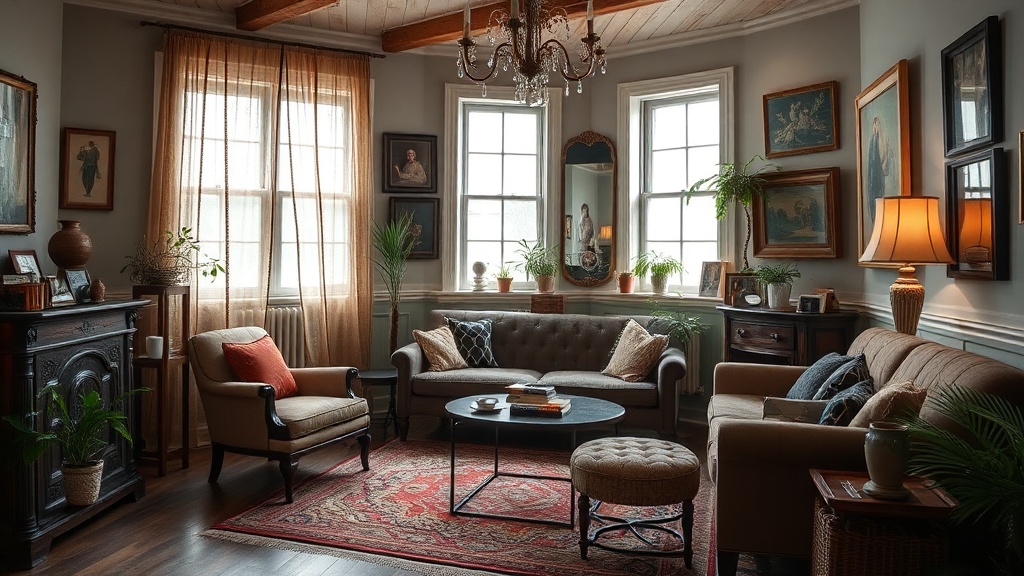
Weaving the Past Into the Present: A Guide to Blending Vintage and Modern Decor

Is it possible to combine vintage and modern styles without creating a cluttered space?
Many homeowners believe that integrating vintage decor into a contemporary setting inevitably leads to an interior design mishmash—a jumbled collection of disparate styles that just don't quite cohere. It's a common misconception that sleek, minimalist modern aesthetics and the rich, often ornate details of vintage pieces are fundamentally at odds. In reality, skillfully mixing old and new can create rooms with depth, personality, and a sense of history that modern-only spaces often lack. This guide will explore how to harmoniously blend these seemingly contrasting styles, transforming your home into a unique reflection of your personal taste, rather than a museum or a thrift store.
The secret lies not in choosing one style over the other, but in understanding how they can complement each other. Vintage items—whether a mid-century sideboard, a Victorian armchair, or a collection of antique prints—bring character, craftsmanship, and a narrative that modern mass-produced items simply can't. Modern design, on the other hand, offers clean lines, functionality, and a sense of calm. When these elements are thoughtfully combined, the result is an inviting, visually interesting, and deeply personal environment. Think of it as a dialogue between different eras, where each piece has something distinct to say.
How can vintage pieces truly complement contemporary design?
The magic of a well-blended space often comes down to contrast and balance. Instead of viewing vintage items as relics, consider them as accents that provide warmth, texture, and a touch of the unexpected against a modern backdrop. For instance, a beautifully aged wooden chest can become a focal point in a living room dominated by a clean-lined sofa and minimalist art. The rustic charm of the chest highlights the sofa's crisp upholstery, and vice-versa. This interplay prevents either style from feeling too sterile or too overwhelming.
One powerful technique is the 80/20 rule, often cited by interior designers: aim for approximately 80% modern elements and 20% vintage. This proportion allows the contemporary design to form the foundation, providing a sense of cohesion, while the vintage pieces inject character and individuality without cluttering the space. The modern foundation ensures functionality and a feeling of freshness, while the older items add soul and a storied past. This isn't a rigid formula, but a helpful guideline to prevent one style from completely overshadowing the other.
Consider the power of unifying elements. A consistent color palette, for example, can bridge the gap between different eras. If your modern space leans into muted blues and grays, look for vintage textiles or artwork that incorporate those hues. Similarly, repeating textures—like polished wood or aged brass—can create visual continuity, even if the pieces themselves originate from different decades.