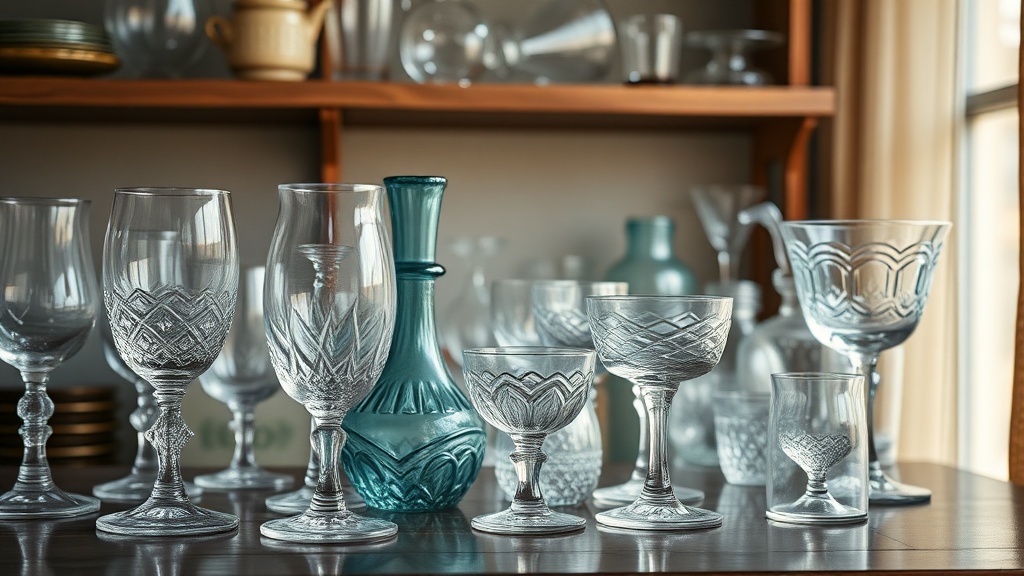
Building a Curated Collection of Vintage Glassware

Searching for Depression Era Glass
The Allure of Mid-Century Colored Glass
Mixing Textures and Eras
Proper Care for Antique Glassware
Displaying Your Finds with Intention
A dinner party guest reaches for a heavy, amber-colored cocktail glass, only to find a hairline fracture near the rim. The glass looks perfect at first glance, but the structural integrity is compromised. This is the risk of uncurated collecting—buying pieces that look good but lack quality or durability. This post explores how to identify high-quality vintage glass, how to spot common defects, and how to build a cohesive collection that serves both aesthetic and functional purposes.
Collecting glass isn't just about filling cabinets. It's about finding pieces that tell a story. Whether it's mid-century depression glass or hand-blown Victorian crystal, each piece has a history. You want to move beyond random thrift store finds and toward a deliberate, thoughtful collection.
How Do You Identify Quality Vintage Glass?
High-quality vintage glass is defined by its weight, clarity, and the precision of its manufacturing marks. You can often tell the difference between mass-produced novelty items and high-end collectible pieces by looking at the thickness of the walls and the consistency of the color. If you're holding a piece of heavy lead crystal, it will feel substantial and refract light much more intensely than standard soda-lime glass.
Look for these specific indicators of quality:
- Weight: High-end crystal or heavy pressed glass feels much more substantial in the hand.
- Clarity: Hold the piece up to a light source. High-quality glass shouldn't have many bubbles (unless it's intentional hand-blown glass) or cloudy patches.
- Refraction: Genuine lead crystal creates a "rainbow" effect when light hits it. This is a hallmark of quality.
- The Base: Check the bottom of the vessel. A smooth, polished base is a sign of a well-finished piece.
One way to understand the history of these materials is to look at the technical history of glassware. Understanding the difference between various types of glass—like soda-lime, borosilicate, or lead crystal—helps you make better decisions at the antique mall. If you're interested in how objects change a space, you might also enjoy reading about how to transform your space with thrifted treasures.
It's easy to get carried away by a pretty color. But a piece of bright pink depression glass might be beautiful, even if it's thin and fragile. A piece of heavy, hand-cut crystal, on the other hand, is an investment in durability. It's a different kind of value.
What Are the Most Common Types of Vintage Glass?
The most common types of vintage glass include depression glass, milk glass, and various forms of colored-glass stemware. Each type offers a different aesthetic and requires different care. If you want a colorful, eclectic look, depression glass is your best bet. If you prefer a clean, monochromatic aesthetic, milk glass provides a striking, opaque white finish that works well in modern or traditional settings.
Here is a breakdown of the most popular categories for collectors:
| Type of Glass | Visual Characteristics | Best Use Case |
|---|---|---|
| Depression Glass | Thin, often colorful, mass-produced during the Great Depression. | Daily dining or display in a sunny window. |
| Milk Glass | Opaque, milky white, often with raised patterns. | Statement pieces or centerpieces. |
| Lead Crystal | Heavy, high clarity, excellent light refraction. | Formal entertaining and holiday dinners. |
| Pressed Glass | Thicker walls, often mimics more expensive hand-cut designs. | Everyday functional use. |
When you're out hunting, keep an eye out for specific brands or patterns. For instance, Fenton Art Glass is legendary for its colorful, hand-blown pieces. If you find a piece of Fenton, it's often a sign of a high-quality find. These aren't just items; they're pieces of art. You'll find that certain patterns, like the "Pink Carnation" pattern in depression glass, are highly sought after by collectors.
Don't feel pressured to buy everything you see. A curated collection is about intentionality. You don't need a hundred mismatched pieces; you need ten pieces that actually look good together. It's a fine line between a collection and a cluttered cabinet.
How Much Does Vintage Glassware Cost?
The cost of vintage glassware varies wildly based on rarity, maker, condition, and current market demand. A single piece of common depression glass might only cost a few dollars at a local garage sale, while a rare, signed piece of Lalique or heavy crystal could cost hundreds or even thousands of dollars. Most collectors start with a budget of $5 to $20 per piece when browsing thrift stores.
Price is influenced by several factors:
- Maker/Brand: A piece marked with a known name like Waterford or Steuben will always command a higher price.
- Condition: This is the big one. A single chip or a "flea bite" (a tiny nick on the rim) can drop the value by 50% or more.
- Pattern Rarity: Common patterns are cheap. Unique or discontinued patterns are expensive.
- Material: Real lead crystal is generally more expensive than standard glass due to the weight and the difficulty of production.
I always suggest starting small. Don't go into a high-end antique shop thinking you'll find a bargain. Those aren't the places for it. Instead, hit your local thrift shops or estate sales. You'll find more interesting things there—and for much less. It's much more satisfying to find a hidden gem than to pay a premium for something that's already been "discovered."
If you're looking for a way to slow down and enjoy the ritual of use, you might find inspiration in savoring the slow morning with manual coffee rituals. Using beautiful, vintage glassware for your morning water or juice can change the entire feel of your day.
The catch? You have to be willing to look closely. Most people walk right past the best pieces because they're looking for "the brand" instead of looking at the quality. If a piece is heavy, clear, and has a clean base, it's worth a second look—even if there's no name on it.
One thing to watch out for is "cloudiness." Some vintage glass develops a permanent film that can't be washed away. This is often caused by chemical etching from dishwashers. If you see a permanent haze inside the glass, leave it on the shelf. It's not a hidden treasure; it's just damaged. It's a common mistake for new collectors to think a little soak in vinegar will fix this, but once the glass is etched, it's permanent.
As you build your collection, think about how these pieces will interact. Will you display them in a glass-front cabinet, or will they be part of your active tableware? A collection that is purely for display is a different kind of hobby than one that is meant to be used. If you intend to use your pieces, you'll need to consider how to clean them safely. Always hand wash vintage glass. The high heat and harsh detergents of a modern dishwasher are the enemies of old glass.
Building a collection is a slow process. It's not a race. You might go months without finding that one specific piece you're looking for. That's okay. The joy is in the hunt. It's in the moment you find a piece of amber glass that perfectly catches the afternoon sun. It's in the weight of a crystal goblet that feels like it belongs in a different era. Keep your eyes open and your standards high.