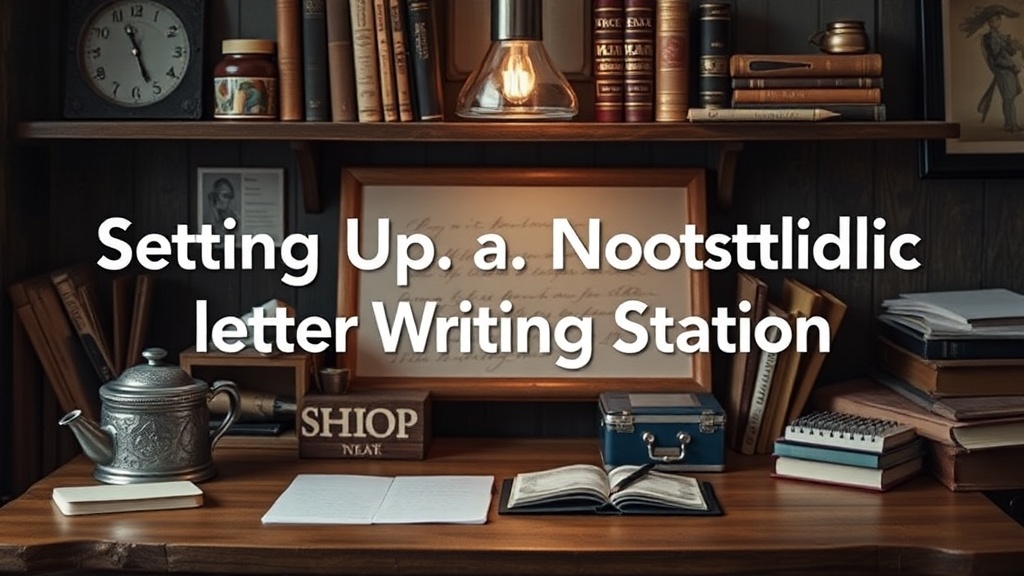
Setting Up a Nostalgic Letter Writing Station

A heavy brass fountain pen rests on a blotter of dark green leather. Beside it, a stack of cream-colored linen paper sits waiting, the edges slightly deckled and uneven. There is a specific weight to a physical letter—a sense of permanence that a text message or a quick email simply cannot replicate. This guide covers how to curate a dedicated space for handwritten correspondence, focusing on the tools, the aesthetic, and the tactile pleasure of slow communication.
Setting up a station isn't just about buying expensive stationery. It's about creating a ritual. In a world that moves at the speed of a fiber-optic connection, taking twenty minutes to sit down and write a letter is a radical act of presence.
What Supplies Do I Need to Start Letter Writing?
You need a reliable writing instrument, high-quality paper, and a comfortable surface to begin your collection. While you don't need to spend a fortune, the quality of your tools determines the friction of the experience. If your pen skips or your paper bleeds, the magic disappears.
I usually start with a fountain pen. If you're new to this, the Lamy Safari is a brilliant entry point—it's durable, functional, and doesn't require a PhD in calligraphy to use. For those who prefer the precision of a fine liner, the Sakura Pigma Micron offers incredible control.
Paper is where most people make mistakes. Avoid standard printer paper; it's too thin and will show every ink bleed. Instead, look for something with a bit of tooth. Here is a quick breakdown of common paper types you might encounter:
| Paper Type | Feel/Texture | Best Use |
|---|---|---|
| Linen Paper | Textured, slightly rough | Formal letters and thank-you notes |
| Vellum | Translucent, smooth | Layering or decorative accents |
| Laid Paper | Distinctive vertical lines | Classic, vintage-style correspondence |
| Cotton Bond | Soft, heavy, luxurious | High-end, keepsake letters |
Don't forget the ink. If you're using a fountain pen, you'll want to look into fountain pen ink varieties. Brands like Iroshizuku offer colors that are much more vibrant than your standard office supplies. A deep, navy blue or a forest green can change the entire mood of a letter.
If you find yourself enjoying the tactile nature of these tools, you might also enjoy building a small library of beautiful hardcover books to keep on your desk for inspiration. A good book of poetry or a classic novel often provides the perfect mental spark for a long-form letter.
How Do I Organize My Stationery?
Organization involves using small trays, vintage tins, or even wooden boxes to categorize your supplies by type and weight. A cluttered desk leads to a cluttered mind, and the goal here is to make the act of writing feel intentional, not messy.
I prefer using a small wooden apothecary chest or even a simple vintage tea tin to hold my wax seals and stamps. It keeps everything within arm's reach without the desk looking like a craft store exploded. A few dedicated slots for pens and a small dish for paper clips can make a huge difference.
Here is my preferred method for organizing a station:
- The Primary Surface: A dedicated desk or a corner of a sideboard. It shouldn't be a multi-purpose space where you also work on a laptop.
- The Writing Kit: A small leather roll or pouch to keep your pens and a small bottle of ink safe.
- The Paper Stack: Keep your stationery in a way that protects it from dust. A glass apothecary jar is great for loose envelopes.
- The Finishing Touches: A dedicated tray for wax-sealing beads, a melting spoon, and a brass seal.
The aesthetic of your station is personal. You might want a minimalist, modern look with clean lines and white paper. Or, you might prefer a more "cluttered scholar" vibe—think dark woods, brass accents, and heavy, cream-colored stock. There is no wrong way to do this. Just make sure the items you choose actually make you want to sit down and write.
Where Should I Place My Station?
Your station should be located in a quiet corner of your home where you won't be interrupted by digital notifications. Ideally, it should be near a window for natural light, which is far better for seeing the subtle nuances of ink colors than a harsh overhead bulb.
If you have a small apartment, even a small wooden tray on a side table can serve as a mobile station. The key is that it feels like a destination. When you sit there, you're entering a different mode of being. It's a way to slow down, much like savoring a slow morning with manual coffee rituals. It's a ritual of the hands.
"The act of writing a letter is an act of giving a piece of your time to another person. It is a gift that arrives in the mail, long after the moment has passed."
It's worth noting that you don't need a massive mahogany desk to make this work. A simple wooden tray on a coffee table or a small writing desk from a thrift store works perfectly. In fact, I often find that the more "lived-in" the furniture looks, the more inviting the station feels. A brand-new, high-gloss desk feels too clinical for something as soulful as a handwritten letter.
If you're looking for pieces to fill your space, don't be afraid to look for used items. I've found that most of my best desk accessories—brass inkwells, vintage blotters, and even old wooden boxes—came from thrift stores or antique shops. It gives the station a sense of history.
The beauty of a letter is that it exists outside of time. A text is gone in a second. A letter can sit in a drawer for twenty years before someone finds it. That weight, that permanence, is what we're trying to build into our daily lives. It's about creating something that actually lasts.
If you find that you enjoy the process of organizing these small, tactile objects, you might also find joy in transforming your space with thrifted treasures. There is a certain satisfaction in finding a piece of history and giving it a new purpose in your modern life.
Don't overthink the cost. A simple ballpoint pen and a notebook are a start. But if you can, try to graduate to a fountain pen and some real paper. The change in the tactile experience is profound. It changes how you think, how you pace your sentences, and how much you actually have to say. It forces you to be more intentional with your words.